

Root Canal Treatment in Chandigarh and Majat
RABRA’S Dental & Implant Clinic provides personalized root canal treatment in Chandigarh, Dharakhand Majat for infected, inflamed or severely damaged teeth. Root canal treatment, commonly known as RCT is a tooth-saving dental procedure used to remove infected tissue from inside a tooth, clean the root canalsand seal them against further infection.
Tooth infection can develop because of deep decay, a cracked tooth, dental injury, a leaking filling, or repeated treatment on the same tooth. Without timely care, the infection may cause severe tooth pain, swelling, sensitivity, difficulty chewing, or an abscess.
Our dentist carefully examines the affected tooth and recommends RCT only when it is clinically necessary. Patients searching for a root canal specialist in Chandigarh, RCT treatment in Sector 19 Chandigarh or a dentist for tooth pain in Dharakh and Majat can schedule a consultation at either of our two clinics.
Protecting Your Smile Before Problems Begin
Why Choose Us
Complete Dental Care
Access general dentistry, dental implants, root canal treatment, cosmetic dentistry, pediatric care, dentures, crownsand preventive treatments under one roof.Personalized Treatment Plans
Every patient receives a carefully planned treatment based on their dental condition, oral health needs, comfortand personal goals.Modern Dental Technology
We use modern dental equipment and updated techniques to support accurate diagnosis, efficient treatmentand a comfortable dental experience.Gentle Family Dentistry
Our caring approach helps children, adults, senior citizensand nervous patients feel comfortable and confident during their dental visits.Hygiene and Patient Safety
We follow appropriate sterilization and infection-control practices to maintain clean treatment areas and a hygienic clinical environment.Two Convenient Locations
Visit our dental clinic in Sector 19C, Chandigarh, or Dharakh, Majat, for convenient access to complete family dental care.Save Your Natural Tooth with RCT
The primary purpose of root canal therapy is to remove infection while preserving the natural tooth. Saving a suitable tooth can help maintain normal chewing, support nearby teethand prevent the need for premature tooth replacement.
During RCT, the infected or inflamed pulp is removed from inside the tooth. The root canals are carefully cleaned, shaped, disinfectedand filled with a suitable material. The tooth is then restored with a filling or dental crown depending on the amount of tooth structure remaining.
Our approach to root canal therapy in Chandigarh and Dharakh focuses on careful evaluation, clear communication, personalized treatment planningand appropriate aftercare.
What Is Root Canal Treatment?
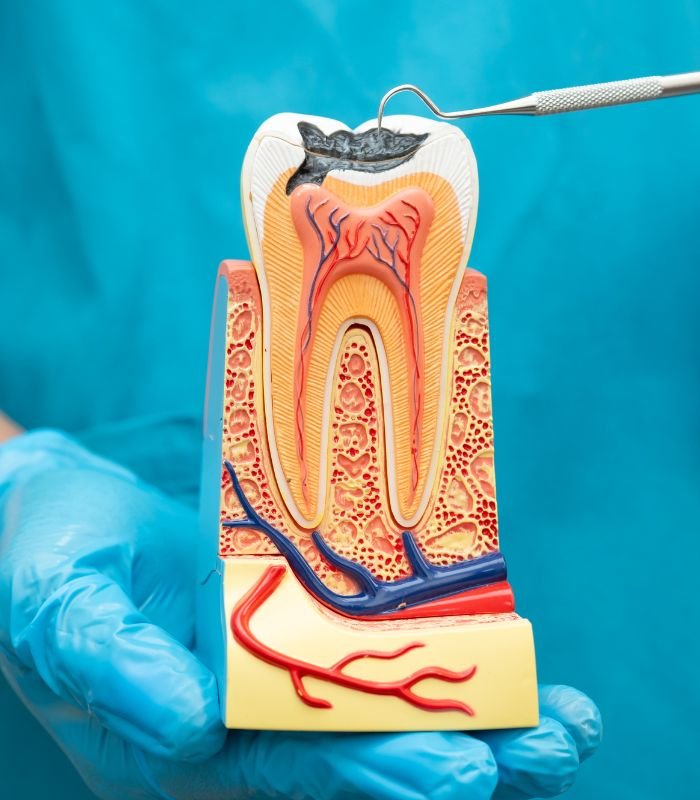
A natural tooth has an outer enamel layer, an inner dentine layerand a central space containing dental pulp. The pulp contains nerves, blood vesselsand connective tissue. If deep decay, trauma, or a crack allows bacteria to reach the pulp, it may become inflamed or infected.
Root canal treatment removes the affected pulp and cleans the internal canal system. After cleaning, the canals are sealed to reduce the risk of reinfection. The visible part of the tooth is then restored so that it can continue functioning.
RCT does not remove the entire tooth. It treats the internal infection while preserving the outer tooth structure and roots whenever possible.
Signs You May Need Root Canal Treatment
Not every toothache requires RCT, but certain symptoms may indicate inflammation or infection inside a tooth. Arrange a dental examination if you experience:
- Persistent or severe tooth pain
- Pain while biting or chewing
- Prolonged sensitivity to hot or cold
- Tooth pain that disturbs sleep
- Swelling around a tooth or the gums
- A pimple or boil on the gum
- Pus or an unpleasant taste in the mouth
- Darkening or discolouration of a tooth
- A deeply decayed tooth
- A cracked or broken tooth
- Tenderness in the nearby gums
- Swelling of the face or jaw
- A loose tooth associated with infection
- Pain that spreads toward the jaw, ear, or head
Some infected teeth produce few or no symptoms. Dental examination and appropriate imaging may therefore be necessary to determine whether root canal treatment is required.
Common Reasons for Root Canal Treatment
Deep Tooth Decay
An untreated cavity can gradually extend through the enamel and dentine until it reaches the dental pulp. Once the pulp becomes irreversibly inflamed or infected, a routine dental filling may no longer be sufficient.
Cracked or Broken Tooth
A crack or fracture can expose the internal portion of a tooth to bacteria. Root canal treatment may be required when the damage affects the pulp but the tooth can still be restored.
Dental Injury
A blow or injury may damage the pulp even when the tooth does not appear visibly broken. The tooth can become painful or discoloured immediately or sometime after the injury.
Repeated Dental Procedures
Multiple treatments on the same tooth may irritate or weaken the pulp. The dentist evaluates the tooth and recommends RCT when the pulp is unable to recover.
Damaged or Leaking Filling
A loose, broken, or leaking filling can allow bacteria to enter the deeper layers of a tooth. The required treatment depends on the extent of decay and pulpal involvement.
Dental Abscess
An abscess is a collection of infection that may develop near the root of a tooth. Root canal treatment may be used to remove the source of infection when the tooth is suitable for preservation.
Root Canal Treatment Procedure
Consultation and Examination
The dentist asks about your symptoms, dental history, medical conditionsand previous treatment. The painful tooth and surrounding gums are carefully examined.
Dental X-Ray and Diagnosis
A dental X-ray may be advised to assess the roots, surrounding bone, depth of decayand signs of infection. The dentist uses the examination and diagnostic findings to determine whether RCT is appropriate.
Local Anaesthesia
Local anaesthesia is used to numb the affected area before treatment. The dentist ensures that the area is appropriately anaesthetized before beginning the procedure.
Isolation of the Tooth
The tooth may be isolated to keep the treatment area clean and dry. Isolation also helps prevent saliva and bacteria from entering the tooth during treatment.
Removal of Infected Pulp
A small opening is created in the tooth to access the pulp chamber and root canals. Inflamed or infected tissue is carefully removed from inside the tooth.
Cleaning and Shaping
The canals are cleaned and shaped using appropriate dental instruments. Disinfecting solutions may be used to reduce bacteria and remove debris from the internal canal system.
Filling and Sealing
After the canals have been properly prepared, they are filled and sealed with a suitable root canal material. A temporary or permanent filling may be placed to close the access opening.
Dental Crown or Final Restoration
Root canal-treated teeth may become more vulnerable to fracture, particularly back teeth that carry greater chewing forces. A dental crown after root canal treatment may be recommended to protect and restore the tooth.
Single-Sitting and Multiple-Sitting RCT
Some root canal treatments can be completed in one appointment, while others require two or more visits. The number of appointments depends on the tooth, canal anatomy, extent of infection, swelling, previous treatmentand response to the procedure.
A single-sitting root canal treatment in Chandigarh may be considered when the tooth and surrounding tissues are suitable. Teeth with extensive infection, complex anatomy, persistent symptoms, or previous unsuccessful treatment may require additional appointments.
The dentist will recommend the appropriate approach after evaluating the tooth. Completing treatment in one visit is not necessarily the best option for every patient.
Root Canal Treatment for Different Teeth
Front-Tooth Root Canal Treatment
Front teeth generally have fewer canals than back teeth, although individual anatomy can vary. After RCT, the tooth may be restored with a tooth-coloured filling or crown depending on its strength and appearance.
Premolar Root Canal Treatment
Premolars may have one or more canals and experience considerable chewing force. The dentist assesses the remaining tooth structure before recommending the final restoration.
Molar Root Canal Treatment
Molar teeth commonly have multiple roots and canals, making their internal anatomy more complex. Careful cleaning, shapingand sealing are important for treating infection within these teeth.
Root Canal Retreatment
A previously treated tooth may occasionally develop recurrent symptoms or infection because of untreated anatomy, leakage, a damaged restoration, or new decay. Root canal retreatment may be considered when the tooth can still be preserved.
Is Root Canal Treatment Painful?
Many patients delay treatment because they are concerned about discomfort. Root canal therapy is performed using local anaesthesia to manage pain during the procedure. The infected tooth may already be painful before treatmentand RCT is intended to remove the affected tissue causing the problem.
Temporary tenderness or mild discomfort may occur after treatment, especially when there was infection or inflammation around the root. The intensity and duration vary from patient to patient. Follow the medication and aftercare instructions provided by your dentist.
Contact the clinic if you experience severe or increasing pain, significant swelling, fever, difficulty opening your mouth, or any other unexpected symptom.
Benefits of Root Canal Treatment
When appropriately recommended, root canal treatment may provide several benefits:
- Helps preserve a natural tooth
- Removes infected or inflamed pulp
- Relieves pain caused by internal tooth infection
- Helps control the source of a dental abscess
- Restores chewing function after final restoration
- Maintains space and alignment within the dental arch
- Avoids premature extraction of a restorable tooth
- Reduces the immediate need for tooth replacement
- Allows the tooth to be protected with a filling or crown
- Supports the natural appearance of the smile
Treatment outcomes vary according to the tooth’s condition, canal anatomy, infection, restoration, oral hygieneand follow-up care.
Dental Crown After Root Canal Treatment
A dental crown may be recommended after RCT when the tooth has lost substantial structure because of decay, fracture, or previous fillings. The crown covers the remaining tooth and helps protect it from chewing forces.
Back teeth generally carry greater bite pressure and are often more likely to require crowns after root canal therapy. Front teeth may sometimes be restored differently depending on their condition.
The type and timing of the final restoration are determined after examining the treated tooth. Delaying a recommended crown may increase the risk of the tooth cracking or the temporary restoration becoming damaged.
Root Canal Treatment Cost in Chandigarh
The cost of root canal treatment in Chandigarh varies according to the tooth and complexity of the procedure. A front tooth, premolarand molar may have different numbers of roots and canals, resulting in different treatment requirements.
Factors that can influence RCT cost include:
- Location of the affected tooth
- Number and shape of root canals
- Severity of infection
- Whether treatment is new or a retreatment
- Condition of the remaining tooth structure
- Need for diagnostic X-rays
- Number of appointments required
- Type of filling or core restoration
- Need for a post and core
- Type of dental crown selected
- Additional gum or dental treatment
An accurate estimate can be provided after a clinical examination. When comparing affordable root canal treatment in Chandigarh, patients should consider the complete procedure, final restoration, tooth complexityand follow-up care rather than comparing only an advertised starting price.
Root Canal Treatment Versus Tooth Extraction
Root canal treatment and tooth extraction address different clinical situations. RCT is considered when an infected tooth can be predictably cleaned, sealedand restored. Extraction is considered when a tooth is too damaged, fractured, loose, or otherwise unsuitable for preservation.
Removing a tooth leaves an empty space that may eventually require replacement with a dental implant, bridge, or denture. Saving a suitable natural tooth through RCT may avoid or delay the need for tooth-replacement treatment.
However, root canal treatment should not be performed when the tooth cannot be properly restored. The dentist will explain the prognosis and available alternatives after evaluating the tooth.
Aftercare Following Root Canal Treatment
Follow your dentist’s instructions carefully after RCT. Appropriate aftercare helps protect the tooth while it is healing and awaiting final restoration.
General aftercare recommendations may include:
- Take prescribed medication as directed
- Avoid chewing until the numbness has completely worn off
- Do not chew hard foods on a temporarily restored tooth
- Brush and floss carefully around the treated area
- Keep the temporary filling clean
- Attend all scheduled appointments
- Complete the recommended final restoration
- Avoid delaying a dental crown when one is advised
- Contact the clinic if the temporary filling comes out
- Report significant pain, swelling, or an altered bite
- Continue routine dental examinations
- Maintain daily oral hygiene
A root canal-treated tooth can remain functional for many years, but its longevity depends on the quality of the final restoration, oral hygiene, bite, habitsand regular dental care.
Why Choose RABRA’S Dental & Implant Clinic?
Careful Diagnosis
We examine the affected tooth and use suitable diagnostic methods to determine whether root canal treatment is necessary.
Tooth-Saving Approach
Our treatment planning focuses on preserving restorable natural teeth whenever clinically appropriate.
Personalized RCT Planning
Every treatment plan is based on the tooth’s condition, root anatomy, infection, symptomsand restorative needs.
Clear Treatment Explanation
Our dentist explains the diagnosis, proposed procedure, possible alternatives, aftercareand estimated treatment charges before beginning treatment.
Modern Dental Techniques
Updated dental instruments and treatment techniques are used to support careful cleaning, shaping, sealingand restoration of the tooth.
Hygiene and Patient Safety
Our clinics follow appropriate sterilization and infection-control practices to maintain a clean and hygienic treatment environment.
Two Convenient Locations
Patients can schedule root canal treatment in Sector 19C, Chandigarh, or visit our dental clinic in Dharakh, Majat, for examination and treatment.
Root Canal Treatment in Chandigarh
RABRA’S Dental & Implant Clinic provides RCT treatment in Sector 19C, Chandigarh, for patients experiencing tooth pain, sensitivity, swelling, deep cavities, cracked teethand dental infection.
Patients searching for a root canal dentist in Chandigarh, root canal specialist in Chandigarh, painless RCT in Chandigarh, or emergency tooth pain treatment in Sector 19 can contact our clinic for an appointment.
Chandigarh Clinic Address
RABRA’S Dental & Implant Clinic
SCF-20, First Floor, Near Bata Shoe
Sector 19C, Chandigarh – 160019
Phone: 8558885591
Root Canal Treatment in Dharakh and Majat
Our dental clinic in Dharakh, Majat provides root canal consultations and treatment for patients from Dharakh, Majat, Kharar, Kurali, Morindaand nearby areas.
Visit us if you have persistent tooth pain, sensitivity, swelling, a deep cavity, a broken tooth, or discomfort while chewing. Patients looking for root canal treatment in Dharakh, RCT treatment in Majat, or a dentist for tooth pain near Kharar and Kurali can schedule an examination.
Dharakh Clinic Address
RABRA’S Dental & Implant Clinic
Majat to Dharakh Road, Dharakh
Majat, Punjab – 140307
Phone: 8558885591
Frequently Asked Questions About Root Canal Treatment
How do I know whether I need RCT?
Persistent tooth pain, prolonged sensitivity, pain while chewing, swelling, a gum boil, or a deeply decayed tooth may indicate a problem inside the tooth. Only a dental examination and appropriate imaging can confirm whether RCT is necessary.
Can antibiotics cure a root canal infection?
Antibiotics may be prescribed in certain situations, but they do not usually remove infected tissue from inside the root canal system. The tooth may still require dental treatment to address the source of infection.
How many appointments does root canal treatment require?
Some cases can be completed in one appointment, while complex or infected teeth may require multiple visits. The number of appointments depends on the tooth, infection, canal anatomyand clinical findings.
Do I need a crown after RCT?
Many root canal-treated teeth, particularly molars and premolars, benefit from crown protection. The dentist will recommend a restoration according to the location and remaining strength of the tooth.
Can an RCT-treated tooth become infected again?
Reinfection can occasionally occur because of leakage, new decay, a crack, complex anatomy, or damage to the restoration. Depending on the condition, retreatment or another procedure may be considered.
How long does a root canal-treated tooth last?
A properly treated and restored tooth may function for many years. Its longevity depends on the condition of the tooth, final restoration, oral hygiene, bite, habitsand routine dental care.
Can I eat after root canal treatment?
Wait until the numbness has worn off before eating. Avoid hard or sticky foods on the treated tooth, particularly if it has a temporary filling or has not yet received its final restoration.
What happens if I delay RCT?
An untreated infection may progress and cause increasing pain, swelling, an abscess, bone involvement, or further damage to the tooth. Delaying care may reduce the possibility of saving the tooth.
Is tooth extraction cheaper than root canal treatment?
Extraction may have a lower initial procedure cost, but replacing the missing tooth later with an implant, bridge, or denture can add further treatment and expense. The best choice depends on whether the tooth can be predictably restored.
What is the price of RCT in Chandigarh?
The price depends on the affected tooth, number of canals, infection, complexity, appointmentsand final restoration. A treatment estimate is provided after examining the tooth.
Ready to Book Your Appointment?
Contact us today to schedule your visit and take the first step toward a healthier smile.